Luxury Vinyl Plank vs Hardwood: Which Is Right for Your Montgomery County Home?
By Christopher Gross · Hardwood Flooring by Christopher · Serving Montgomery & Bucks County, PA
Luxury vinyl plank vs hardwood isn't a question with one right answer. They're different materials that solve different problems, and plenty of homes are best served by using each where it fits.
We install both, so here's a plain comparison to help you decide room by room. Keep in mind that neither category performs the same across the board. Results depend on the specific product, the subfloor, and the quality of the installation.
Side-by-Side Comparison
| Feature | Luxury Vinyl Plank | Hardwood |
|---|---|---|
| Moisture Resistance | Luxury Vinyl Plank: Often strong, but varies by product. Water can still get through seams and edges. | Hardwood: Sensitive to standing water and big humidity swings. Spills need quick cleanup. |
| Pets | Luxury Vinyl Plank: Often handles claws well with a thicker wear layer. Not scratch-proof. | Hardwood: Can scratch and dent. Harder species and lower sheens help. Pet urine can stain. |
| Maintenance | Luxury Vinyl Plank: Regular sweeping and cleaning as the manufacturer directs. | Hardwood: Regular sweeping and wood-safe cleaner, plus a recoat or refinish over time. |
| Repairability | Luxury Vinyl Plank: Can't be sanded or refinished. Damaged planks may be replaceable, depending on the installation. | Hardwood: Can be sanded and refinished. Damaged boards can often be replaced and blended in. |
| Lifespan | Luxury Vinyl Plank: Depends on wear layer, product quality, subfloor, and use. Replaced when worn out. | Hardwood: Solid hardwood can last for decades with care and refinishing. Engineered floors depend on veneer thickness. |
| Budget | Luxury Vinyl Plank: Usually lower upfront, with a wide range between products. | Hardwood: Usually higher upfront, with the option to refinish later instead of replacing. |
These are general comparisons, not guarantees. Always check the manufacturer's specifications and warranty for the exact product you're considering.
Moisture: What "Waterproof" Does and Doesn't Mean
Moisture is often what decides this comparison, but not all LVP is waterproof, and the label can mean different things from one product to the next. Even when a plank itself resists water, moisture can travel through seams, around the edges of the room, and into the subfloor below.
That's why installation matters as much as the box label. Luxury vinyl installation in a basement should start by checking the slab for moisture and confirming the product is rated for below-grade use. Hardwood has its own limits. It reacts to the humidity swings between Pennsylvania summers and heated winters, and it isn't the right material for an area that stays wet.
Pets, Kids, and Everyday Wear
For LVP, the wear layer is the spec to look at. If you have large or active dogs, we recommend at least 12 mils. A thicker wear layer helps, but sharp objects and dragged furniture can still damage any vinyl floor.
Hardwood will show wear in a busy home, but you have ways to manage it. White oak and maple hold up better than softer species, and matte or satin finishes hide everyday scuffs. When the floor does wear down, it can be sanded and refinished. Choosing between species? See our white oak vs. walnut comparison.
Long-Term Cost and Repairs
LVP usually costs less upfront, which makes a real difference across a large basement or an entire rental property. The trade-off comes later. Once the wear layer is gone, the floor can't be refinished, and it may be hard to match planks if a product has been discontinued. It's worth setting aside a few extra planks after installation.
Hardwood installation usually costs more at the start, but a solid floor can be renewed instead of replaced, and a new stain can change its look along the way. Our installation cost guide and refinishing cost guide explain what shapes those numbers.
If you're wondering about resale, no flooring choice guarantees a return. Buyers and neighborhoods differ, so a local real estate professional is the best person to ask about your home. We'd choose the floor that suits how you actually live in it.
Which Floor Fits Which Room?
LVP is often a strong fit for:
- Basements, with the right product and subfloor preparation
- Laundry rooms, mudrooms, and other areas prone to spills
- Rental properties and busy spaces where upfront cost is a priority
Hardwood is often a strong fit for:
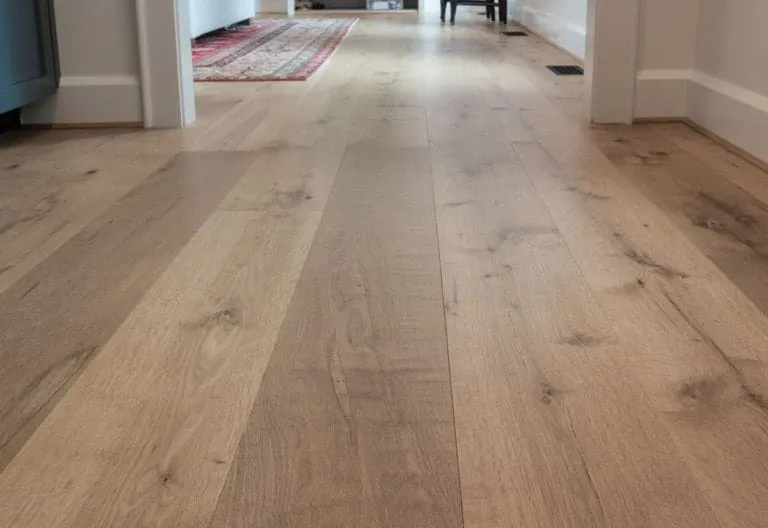
- Living rooms, dining rooms, bedrooms, and hallways
- Homes where you want to match or extend existing wood floors
- Long-term homes where you'd like the option to refinish or change the color
Kitchens can go either way, depending on how you cook, clean, and want the floor to flow into the rooms around it. In many homes, the best answer is hardwood on the main living levels and LVP downstairs.
The Best Way to Decide? Start With Your Home
Subfloor conditions, moisture, pets, and the light in your rooms all affect the right choice. Start with a complimentary project review by phone or photos, then book a flooring consultation if your project needs an in-person look. Since we install both, you'll get a recommendation based on your home, room by room.
Not sure which floor fits your home?
Get honest advice on hardwood and luxury vinyl across Montgomery & Bucks County.
Flooring Consultation
Still deciding between LVP and hardwood?
Christopher installs both, so you'll get a straight recommendation for each room based on your home and how you live in it.
(267) 378-1964